
Driving Licence Application: Everything You Need to Know
A driving licence application is the first step toward becoming a legally licensed driver in the United Kingdom. Whether you’re applying for your first provisional licence, replacing a lost licence, renewing an expired photocard, or upgrading to a full driving licence, understanding the application process can save you time and help you avoid unnecessary delays.
The Driver and Vehicle Licensing Agency (DVLA) manages driving licence applications for drivers in England, Scotland, and Wales. Most services are available online, making it quicker and easier than ever to apply or update your licence. Drivers in Northern Ireland use the Driver & Vehicle Agency (DVA), which has a separate application process.
This guide explains everything you need to know about submitting a driving licence application, including eligibility, required documents, costs, processing times, and common mistakes to avoid.
What Is a Driving Licence Application?
A driving licence application is the process of requesting a new driving licence or making changes to an existing one through the DVLA.
You may need to submit an application to:
- Apply for your first provisional driving licence.
- Apply for your first full driving licence.
- Renew an expired driving licence.
- Replace a lost or stolen licence.
- Replace a damaged licence.
- Update your name or address.
- Renew your driving licence photograph.
- Add new vehicle categories after passing additional tests.
Who Can Apply?
Eligibility depends on the type of application.
For a first provisional licence, you generally must:
- Be at least 15 years and 9 months old.
- Be able to read a number plate from 20 metres away.
- Have permission to live in Great Britain for at least 185 days.
Additional requirements may apply for other types of driving licence applications.
Types of Driving Licence Applications
First Provisional Driving Licence
This is the starting point for new drivers.
A provisional licence allows you to:
- Learn to drive with an approved instructor.
- Practise with an eligible supervising driver.
- Book your theory test.
- Book your practical driving test.
Full Driving Licence
After passing both the theory and practical driving tests, most drivers automatically receive their first full driving licence if the examiner submits the application electronically.
Some applicants may need to apply by post in specific circumstances.
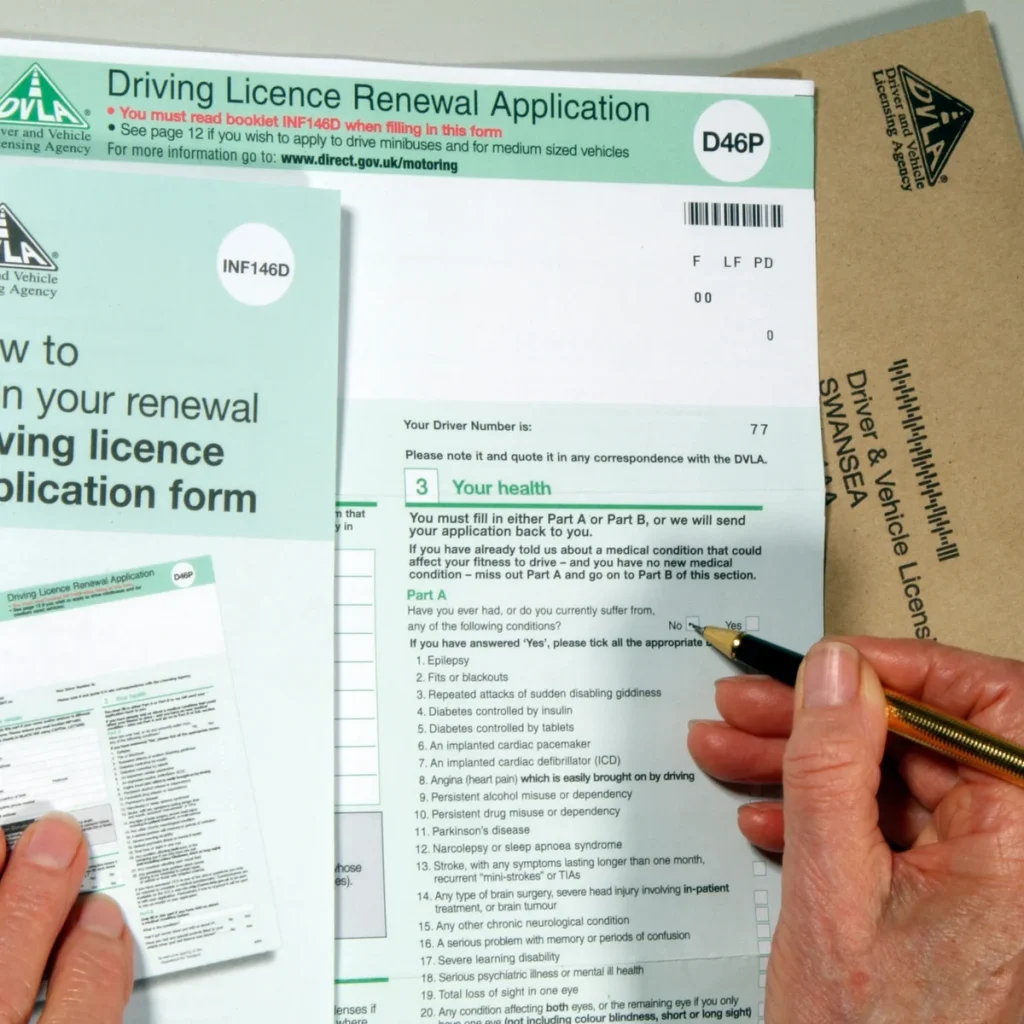
Renewal Application
You may need to renew your licence if:
- Your photocard is expiring.
- You reach a renewal age.
- Your licence has expired.
- Your photograph needs updating.
Replacement Application
Apply for a replacement if your licence has been:
- Lost.
- Stolen.
- Damaged.
- Destroyed.
Update Application
You should update your licence if you:
- Change your address.
- Change your legal name.
- Need to update your photograph.
- Need to correct personal information.
Documents You’ll Need
Depending on your application, you may need:
- Proof of identity.
- Your National Insurance number.
- Your current address.
- Your existing driving licence (if applicable).
- A passport-quality photograph (for some postal applications).
- Payment for the relevant fee.
Having your documents ready before you begin helps make the application process much smoother.
How to Complete a Driving Licence Application
Step 1: Choose the Correct Service
Select the type of application that matches your circumstances.
Step 2: Verify Your Identity
Most online applications require identity verification.
Step 3: Enter Your Details
Carefully enter:
- Your name.
- Address.
- Date of birth.
- National Insurance number (where requested).
Step 4: Upload or Provide Supporting Information
Depending on the application, you may need to provide:
- A digital photograph.
- Passport information.
- Existing licence details.
Step 5: Pay the Fee
Complete payment using an accepted payment method where applicable.
Step 6: Submit Your Application
After submission, you’ll normally receive confirmation, and the DVLA will begin processing your application.
Online vs Postal Applications
Applying Online
Advantages include:
- Faster processing.
- Secure identity verification.
- Immediate confirmation.
- Convenient 24/7 access.
Applying by Post
Some applications require a paper D1 application form, available from many Post Office branches.
Postal applications may take longer to process but remain available for applicants who cannot use online services.
Application Fees
Fees vary depending on the service you need.
Examples include:
- First provisional driving licence (online): £34.
- Replacement of a lost, stolen, damaged, or destroyed licence: £20.
- Photocard renewal fees vary depending on whether you apply online or by post. Always check the latest official fee schedule before applying.
How Long Does a Driving Licence Application Take?
Processing times depend on the type of application and whether additional checks are required.
Typical timeframes are:
- Online applications: Often processed within one week.
- Postal applications: Usually take around three weeks, although complex applications can take longer.
Tracking Your Application
The DVLA provides a service that allows applicants to track the progress of certain driving licence applications.
Tracking your application helps you:
- Confirm it has been received.
- Monitor processing progress.
- Know when your licence has been issued.
Common Mistakes to Avoid
Many applications are delayed because applicants:
- Enter incorrect personal details.
- Use an old address.
- Forget supporting documents.
- Submit poor-quality photographs.
- Apply through unofficial websites.
Always double-check your application before submitting it.
Tips for a Successful Application
To improve your chances of a smooth application:
- Read all instructions carefully.
- Keep your personal information up to date.
- Use official government services.
- Submit accurate documents.
- Apply well before any deadlines.
- Keep copies of important documents where appropriate.
Frequently Asked Questions
How do I apply for my first driving licence?
Most first-time applicants begin by applying for a provisional driving licence online if they meet the eligibility requirements.
Can I complete my driving licence application online?
Yes. Most DVLA driving licence services can be completed online.
How long does the application take?
Online applications often arrive within one week, while postal applications usually take around three weeks if no additional checks are required.
Can I track my application?
Yes. The DVLA offers an application tracking service for eligible applications.
What happens if my application is delayed?
If additional identity, medical, or document checks are needed, processing may take longer than the standard timeframe.
Final Thoughts
Submitting a driving licence application is an important milestone for every driver in the UK. Whether you’re applying for your first provisional licence, renewing your photocard, replacing a lost licence, or updating your personal details, following the correct process helps ensure your application is completed quickly and accurately.
Using official DVLA services, preparing your documents in advance, and carefully checking your application before submission can help you avoid delays and receive your new driving licence as soon as possible.